Advertisement
The Modified Bass Technique (also known as the horizontal vibrating and sweeping method) is one of the most effective and dentist-recommended ways to brush your teeth. It’s an improved version of the classic Bass method, combining short horizontal vibrations (to clean the gumline and sulcus) with a sweeping/flicking motion (to remove plaque from the tooth surfaces).
This method excels at removing plaque from both the gumline (where gingivitis starts) and the tooth surfaces — making it ideal for preventing cavities, gum disease, and bleeding gums.
Step-by-Step Instructions for the Modified Bass Technique
- Position the Brush at the Gumline
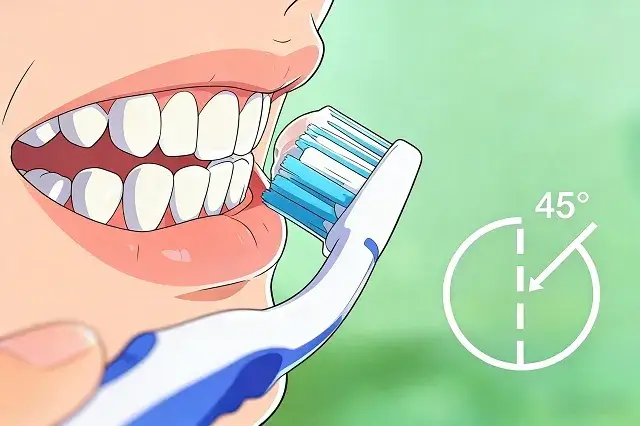
Place the toothbrush head so the bristles point toward the gumline (upward for upper teeth, downward for lower teeth). Angle the bristles at about 45 degrees to the long axis of the tooth. Apply light pressure so some bristles gently enter the gum sulcus (the tiny space between tooth and gum) while others rest on the gum tissue. Close-up examples of proper 45-degree brush placement:
- Vibrate & Sweep (Main Motion)
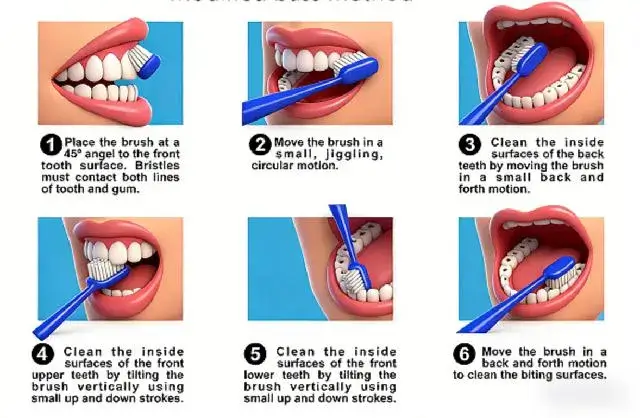
- Start with the cheek side (outer surfaces) of the back teeth.
- Work on 2–3 teeth at a time.
- Make short, gentle horizontal vibrating movements (back and forth, about 1 mm) for several seconds.
- Then, sweep/flick the brush toward the chewing surface (crown) to remove loosened plaque.
- Move to the next group of 2–3 teeth, overlapping slightly with the previous area.
- Continue systematically around the entire mouth.
- Brush the Inner (Tongue/Lingual) Surfaces
Use the same vibrating + sweeping motion for the inner surfaces of the back teeth. - Special Technique for Front Teeth (Inner Surfaces)
Hold the brush vertically (like holding a pencil).
- For upper front teeth: Sweep downward from gumline to tooth edge.
- For lower front teeth: Sweep upward from gumline to tooth edge.
This ensures you clean the tricky inner surfaces without missing the gumline. Demonstration of vertical brushing for front inner surfaces:
- Brush the Chewing (Occlusal) Surfaces
Point the bristles directly at the biting surfaces. Use short back-and-forth strokes with slight pressure to clean the grooves and pits. Examples of brushing the biting surfaces:
Important Tips for Best Results
Here’s a quick comparison of correct vs. common incorrect brushing techniques (avoid scrubbing hard like sawing!):
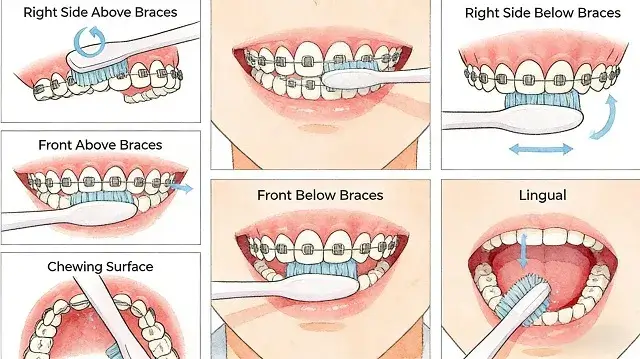
- Time: Brush for at least 2 minutes each time (use a timer or electric brush with built-in timer)
- Frequency: At least twice daily — morning and night (nighttime brushing is especially critical)
- Coverage: Every tooth surface must be brushed — don’t skip areas
- Pressure: Use light pressure — hard brushing can damage gums and enamel
- Brush type: Soft or extra-soft bristles recommended
Mastering the Modified Bass Technique takes a little practice, but it’s one of the best investments you can make for long-term oral health. Your gums and teeth will feel cleaner, and you’ll reduce your risk of cavities and gum problems dramatically.
Have you tried the Modified Bass method before? How long does it take you to brush? Share in the comments — let’s help each other improve! 🦷✨